
A viral game does not become popular by accident. It usually has a clear hook, fast action, simple entry, and a strong reason for players to try again. If you want to build a game with real reach, you need to think beyond the idea itself. You need to shape the first few seconds, the feedback, the challenge, and the replay loop. Astrocade gives creators a faster way to turn ideas into playable drafts, but the real difference comes from how you design the experience. Top creators do not just build more. They build with sharper focus.
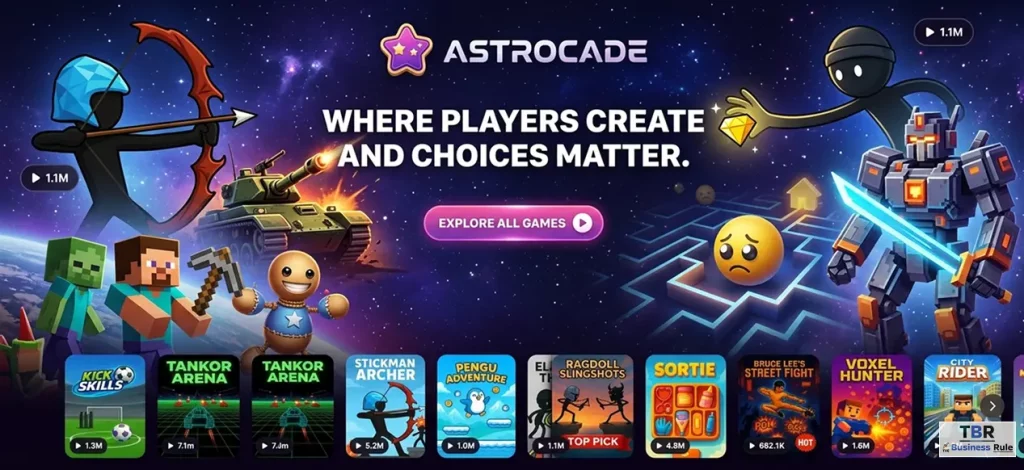
How an AI game maker helps creators test faster
An AI game maker can help creators move from a rough thought to a playable draft without spending too much time on setup. This speed matters because viral potential is hard to judge in your head. An idea may sound fun, but the real test happens when someone plays it. Does the player understand the goal quickly? Does the first action feel good? Is there a reason to try again after failing? Those answers come from testing, not guessing.
A no-code game maker also helps creators stay focused on the parts that players feel first. Instead of spending all your early time on technical steps, you can work on the hook, controls, pacing, feedback, and reward. That does not mean the tool does the creative thinking for you. It means you get to the testing stage sooner. Once the first version is playable, you can notice what works, cut what feels weak, and improve the part that gives the game its energy.
What top creators do before they publish
Top creators do not wait until a project is huge before checking if it works. They test the smallest playable version first. They know that a clear core can grow, but a messy core becomes harder to fix later. Before they create a game, they ask what the player will do in the first 10 seconds and why that action should matter.
Use this simple creator check before publishing:
- Can the idea be understood in one sentence?
- Does the player get to act quickly?
- Is the goal clear without a long guide?
- Does failure feel fair, not random?
- Does the first win or reward appear soon enough?
- Is there one moment that feels worth sharing?
- Can someone improve after each attempt?
- Does the game restart or continue without friction?
- If you make your own game from this idea, can the first version stay small?
- Is the strongest part visible early?
The hook must be clear before the content gets bigger
A hook is the reason someone stops, clicks, and starts playing. It may be a simple challenge, a funny idea, a tense moment, a smart rule, or a satisfying action. The hook should not be hidden deep inside the project. If players need several minutes to understand why the game is fun, many of them will leave before they reach that point.
This is where top creators think differently. They do not build a long road to the fun. They move the fun closer to the start. If the game is about skill, the player gets a skill test early. If the game is about survival, the pressure appears soon. If the game is about strategy, the first choice matters right away. A strong hook gives the player a reason to care before the project asks for more time.
About Mini Tanks 2
Mini Tanks 2 is a casual tank battle game where the player controls a small tank and fights against enemy tanks in fast-paced action. The idea has a clear creator path because the first version can focus on movement, aiming, shooting, enemy pressure, and short battle rounds. A creator can make the experience stronger through clear weapon feedback, fair enemy behavior, arena layout, score goals, quick restarts, and difficulty that rises without feeling unfair.
How a game builder improves the first minute
A game builder can help you shape the first minute with more care because you can test, adjust, and replay the opening quickly. The first minute is where the player decides if the experience is worth more attention. Top creators treat this part like the front door. If it is slow, confusing, or dull, the rest of the project may never get a fair chance.
Focus on these first-minute signals:
- The player understands what they control.
- The main action starts quickly.
- The goal is visible or easy to sense.
- The first challenge feels fair.
- The game reacts clearly after each action.
- The player knows why they lost or won.
- The pace does not drag.
- The strongest feature appears early.
- The first session gives a reason to continue.
- The project feels simple to start, but not empty.
Viral design needs replay, not just attention
Getting attention once is not enough. A strong project needs replay value. Replay value means the player has a reason to come back, retry, improve, beat a score, clear a harder stage, win faster, or use a better strategy. If the experience only works once, it may get clicks but not long-term growth.
Top creators build replay into the core. They make failure understandable. They make success feel earned. They let players feel progress even after a short session. This can happen through score, time, levels, upgrades, tougher opponents, better routes, or cleaner skill. The key is that the player should feel, “I can do better next time.” That feeling is one of the strongest engines behind repeat play.
How to build a game people remember
To build a game people remember, focus on one strong feeling. Do you want the player to feel fast, clever, tense, powerful, careful, lucky, or skilled? Pick one main feeling and build around it. A project that tries to feel like everything often ends up feeling like nothing. A project with one clear emotional target is easier to understand and easier to share.
For example, a tense game should create pressure early. A skill game should reward clean timing. A strategy game should make choices matter. A funny game should let the funny moment happen fast. This focus helps every feature serve the same purpose. Top creators do not add features just because they can. They add features because those features strengthen the feeling they want players to remember.
Why making games is about cutting weak parts
Making games is not only about adding more. A lot of good design comes from removing what does not help. Extra menus, slow intros, unclear goals, crowded screens, and too many rules can weaken a strong idea. Top creators are willing to cut parts that distract from the main experience.
This can be hard because creators often like their own ideas. But the player does not see your effort. The player feels the result. If a feature slows the first minute, hides the goal, or makes the action harder to understand, it may need to go. A cleaner version often feels stronger than a bigger version. Good editing makes the best part easier to notice.
Top creators listen to behavior, not only opinions
Player opinions can help, but behavior often tells the truth faster. Someone may say the game is fine, but if they stop after one try, something is missing. Someone may not explain why they like a feature, but if they repeat it again and again, that feature matters. Top creators watch what players do.
Look for simple behavior patterns. Where do players pause? Where do they fail? Where do they smile? What do they repeat? What do they ignore? What makes them restart? These signs show you what to improve. If players understand the opening but leave after the first round, the replay loop may need work. If they stay but seem confused, the goal or feedback may need to be clearer.
A viral game usually has a clear hook, a strong first minute, fair challenge, quick feedback, and a reason to replay. Top creators do not rely on luck. They build small, test early, watch real reactions, and improve the strongest part first. They also remove weak parts that slow the experience. That is what makes their projects feel tighter, clearer, and easier to share.
Astrocade can help creators create game ideas faster, but reach comes from smart design choices. Start with a clear hook, make the opening easy to understand, and give players a reason to try again. A project does not need to be huge to spread. It needs to feel clear, fun, and worth one more play.